Are We Just Living Longer or Living Better?
✍️ Written by Dr. Raghuveer S.N. – Ayurvedacharya | Heartful Healer
Modern medicine has transformed human life in remarkable ways. Advances in healthcare, improved sanitation, vaccinations, better nutrition, and early disease detection have significantly increased life expectancy across the world. Today, many people are living longer than previous generations ever imagined.
But longevity alone does not guarantee well-being.
A growing number of people are spending the last decades of their lives managing chronic illnesses, taking multiple medications, and coping with reduced mobility, declining cognitive function, and dependence on others for everyday activities.
This raises an important question:
Are we simply adding more years to life, or are we adding more life to those years?
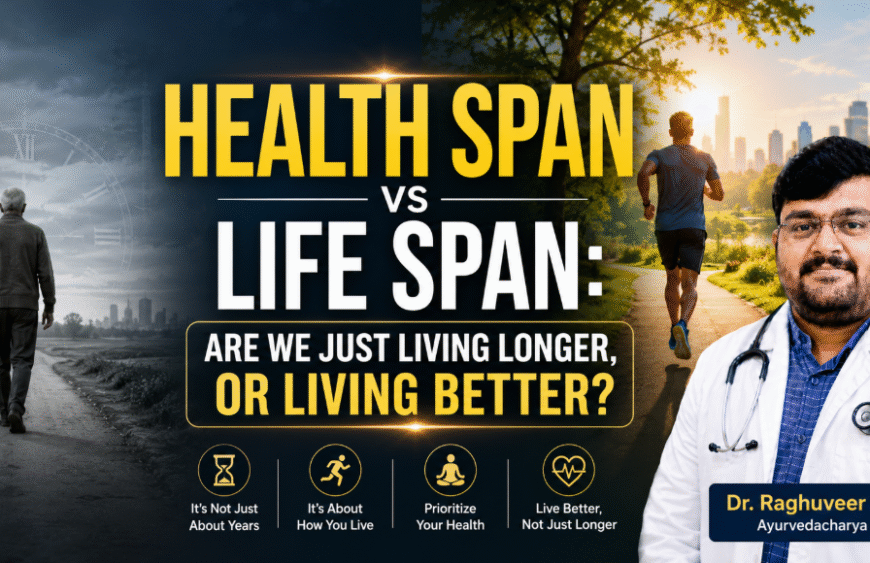
The answer lies in understanding the difference between lifespan and healthspan—a concept that is becoming central to modern preventive healthcare and has long been emphasized in Ayurveda.
Understanding Lifespan
Lifespan refers to the total number of years a person lives.
It is a measure of survival.
For example, if someone lives to the age of 90, their lifespan is 90 years.
While increasing lifespan is undoubtedly an achievement of modern healthcare, it tells us very little about the quality of those years.
Did the person remain active?
Were they independent?
Did they enjoy good physical and mental health?
Could they continue doing the things they loved?
Lifespan measures quantity.
It does not measure quality.
What Is Healthspan?
Healthspan refers to the number of years a person lives in good health—free from significant disability and able to enjoy an active, independent, and fulfilling life.
It is not merely about avoiding disease.
It is about maintaining:
- Physical strength
- Mental clarity
- Emotional resilience
- Healthy metabolism
- Functional mobility
- Social engagement
- Independence in daily living
Simply put:
Lifespan asks, “How long did you live?”
Healthspan asks, “How well did you live?”
The true goal of healthcare should be to maximize both.
Why the Difference Matters
Many chronic diseases develop silently over years before symptoms become obvious.
Conditions such as:
- Type 2 diabetes
- Hypertension
- Obesity
- Fatty liver disease
- Arthritis
- Osteoporosis
- Heart disease
- Cognitive decline
often reduce quality of life long before they shorten lifespan.
A person may technically live for decades after developing these conditions, but those years may involve frequent hospital visits, reduced mobility, medication dependence, and diminished vitality.
Improving healthspan means delaying or preventing these conditions so that more years are lived with energy and independence.
The Silent Enemies of Healthspan
Modern lifestyles have introduced several factors that accelerate biological ageing and increase the burden of chronic disease.
These include:
- Sedentary lifestyles
- Highly processed foods
- Excess sugar intake
- Poor sleep
- Chronic stress
- Smoking and alcohol misuse
- Environmental pollution
- Lack of physical activity
These habits gradually increase inflammation, insulin resistance, oxidative stress, and hormonal imbalance—all of which contribute to faster ageing and reduced healthspan.
Fortunately, many of these factors are modifiable.
Small, consistent lifestyle improvements can produce meaningful long-term benefits.
Ayurveda: A Science Focused on Healthspan
Long before the concept of healthspan entered modern medical discussions, Ayurveda emphasized preserving health rather than merely treating disease.
One of Ayurveda’s foundational principles is:
“Swasthasya Swasthya Rakshanam”
which means:
“To protect the health of the healthy.”
This reflects a preventive approach that aims to maintain balance before illness develops.
According to Ayurveda, true health is a harmonious state where:
- Doshas (Vata, Pitta, Kapha) remain balanced
- Agni (digestive and metabolic fire) functions optimally
- Dhatus (body tissues) are nourished
- Waste elimination occurs efficiently
- The mind remains calm and clear
- The senses function harmoniously
This holistic definition closely aligns with the modern concept of healthspan.
Building Healthspan Every Day
Healthy ageing is not determined by genetics alone.
Our daily habits shape how well we age.
1. Eat for Nourishment, Not Just Calories
A healthspan-supportive diet emphasizes:
- Seasonal fruits and vegetables
- Whole grains
- Quality proteins
- Healthy fats
- Adequate fiber
- Proper hydration
Limiting processed foods, excessive sugars, and trans fats helps reduce inflammation and supports metabolic health.
Ayurveda also encourages eating according to one’s digestive capacity, maintaining regular meal timings, and practicing mindful eating.
2. Keep Moving
Physical activity remains one of the strongest predictors of healthy ageing.
Regular movement helps maintain:
- Muscle strength
- Bone density
- Joint flexibility
- Cardiovascular health
- Insulin sensitivity
- Balance and coordination
Walking, yoga, resistance training, cycling, swimming, and other enjoyable forms of exercise all contribute to preserving function throughout life.
Consistency matters more than intensity.
3. Prioritize Restorative Sleep
Sleep is the body’s natural repair mechanism.
During quality sleep, the body supports:
- Tissue repair
- Hormonal regulation
- Memory consolidation
- Immune function
- Emotional recovery
Poor sleep has been linked to obesity, diabetes, hypertension, depression, and accelerated ageing.
Creating healthy sleep habits is therefore an investment in both lifespan and healthspan.
4. Manage Stress Before It Manages You
Chronic stress affects nearly every organ system.
Persistently elevated stress hormones can contribute to:
- High blood pressure
- Elevated blood sugar
- Weight gain
- Digestive disorders
- Sleep disturbances
- Reduced immunity
Learning effective stress management techniques is essential for long-term health.
Heartfulness Meditation: Supporting Healthy Ageing from Within
Physical health alone does not define healthy ageing.
Mental and emotional well-being are equally important.
Heartfulness Meditation offers a gentle, heart-centered practice that helps cultivate inner calm and emotional balance.
Regular practice may help individuals:
- Reduce stress
- Improve emotional resilience
- Enhance mental clarity
- Support better sleep
- Improve self-awareness
- Encourage healthier lifestyle choices
While meditation is not a substitute for medical care, it complements healthy living by creating the mental steadiness needed to sustain positive habits over time.
A calmer mind often supports a healthier body.
Healthy Ageing Begins Earlier Than You Think
Many people assume healthy ageing becomes important after the age of sixty.
In reality, healthspan begins much earlier.
The habits practiced in the 30s, 40s, and 50s often determine health during later decades.
Protecting muscle mass, maintaining metabolic health, staying physically active, managing stress, eating well, and sleeping adequately all help preserve function as we age.
The earlier these habits are established, the greater the long-term benefits.
Prevention Is the Future of Healthcare
Healthcare is gradually shifting from a disease-centered model to a prevention-centered approach.
Instead of waiting for illness to develop, the focus is increasingly on identifying risk factors early and supporting long-term wellness through lifestyle modification.
This approach aligns closely with Ayurvedic principles, which emphasize maintaining balance rather than merely correcting imbalance after disease appears.
The future of healthcare may therefore be measured not only by how many years we add to life, but by how many healthy, meaningful years we help preserve.
Final Thoughts
Living longer is a remarkable achievement.
Living longer with vitality, independence, purpose, and joy is an even greater one.
Healthspan reminds us that every healthy meal, every walk, every good night’s sleep, every moment of movement, and every effort to manage stress contributes to the quality of our future.
The goal is not simply to celebrate a long life.
It is to create a life where those years remain active, fulfilling, and meaningful.
Because true success is not measured only by the number of birthdays we celebrate—
It is measured by how fully we are able to live each one.
Continue Your Journey Towards Better Health
If you would like to understand how simple lifestyle choices can help improve your healthspan, prevent lifestyle disorders, and support long-term well-being through Ayurveda and evidence-informed practices, I invite you to explore my books.
📖 Read my books here: www.drraghuveersn.com
Learn | Live | Love – Ayurveda
Dr. Raghuveer S.N.
BAMS | FICM | CCAD
Medical Officer – Wellness by Heartfulness
Medical Reviewer – PharmEasy
Author | Researcher | Wellness Coach